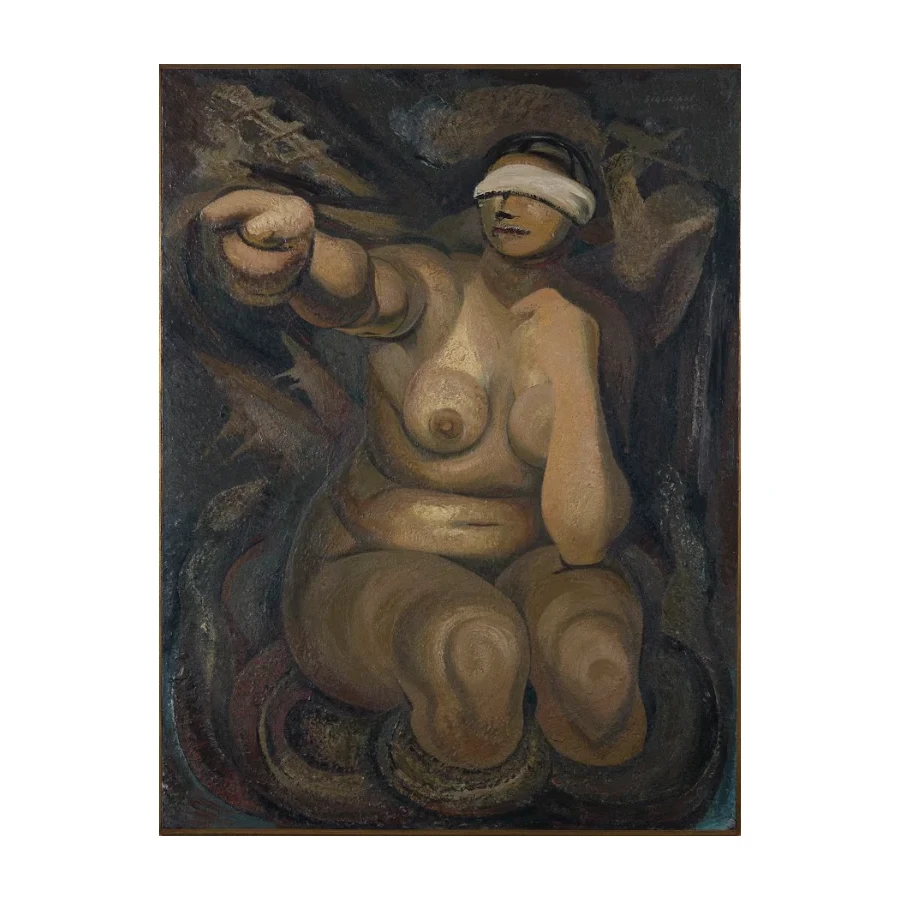
Alfredo Volpi (1896–1988) was a pivotal figure in Brazilian modern art. Born in Lucca, Italy, he immigrated to São Paulo, Brazil, at a young age. A self-taught artist, Volpi began his career with naturalistic landscapes before gradually embracing geometric abstraction. His association with the Grupo Santa Helena in the 1930s marked a significant period of artistic development.
Volpi is renowned for integrating elements of Brazilian folk traditions into his work, particularly the bandeirinhas motif, which became a hallmark of his paintings in the 1950s and 1960s. His use of tempera, inspired by Renaissance techniques, and his focus on color and form positioned him as a bridge between traditional and contemporary art practices. In 1953, he received the Grand Prix for Brazilian painting at the São Paulo Art Biennial, solidifying his status as a leading modernist painter.